The complete buyer's guide
The
Home‑Buying
Guide
Your step-by-step guide to buying a home with confidence.
Helping Columbus buyers make smart decisions without pressure

Soyoe Sackey
Real estate agent · Take A Look Real Estate Brokers
Scroll to begin ↓
A letter to you
Welcome
"My goal isn't to pressure you into buying a home. My goal is to help you understand every step so you can make the best decision for you."
If you're holding this guide, you're probably somewhere between curious and ready — and that's exactly where you should be. Buying a home is one of the biggest decisions you'll make, and it deserves more than a rushed showing and a signature.
I wrote this guide for the version of you who wants to understand what's happening before it happens. Every chapter walks through one part of the process in plain language, so nothing feels like a surprise and no one can talk you into something you're not ready for.
Wherever you are in the journey, I'm glad you're here.
What's inside
Table of Contents
Chapter One
Is Homeownership Right for You?
Before we talk homes, we talk about you — your finances, your lifestyle, and what you actually want out of the next chapter.
Questions worth sitting with
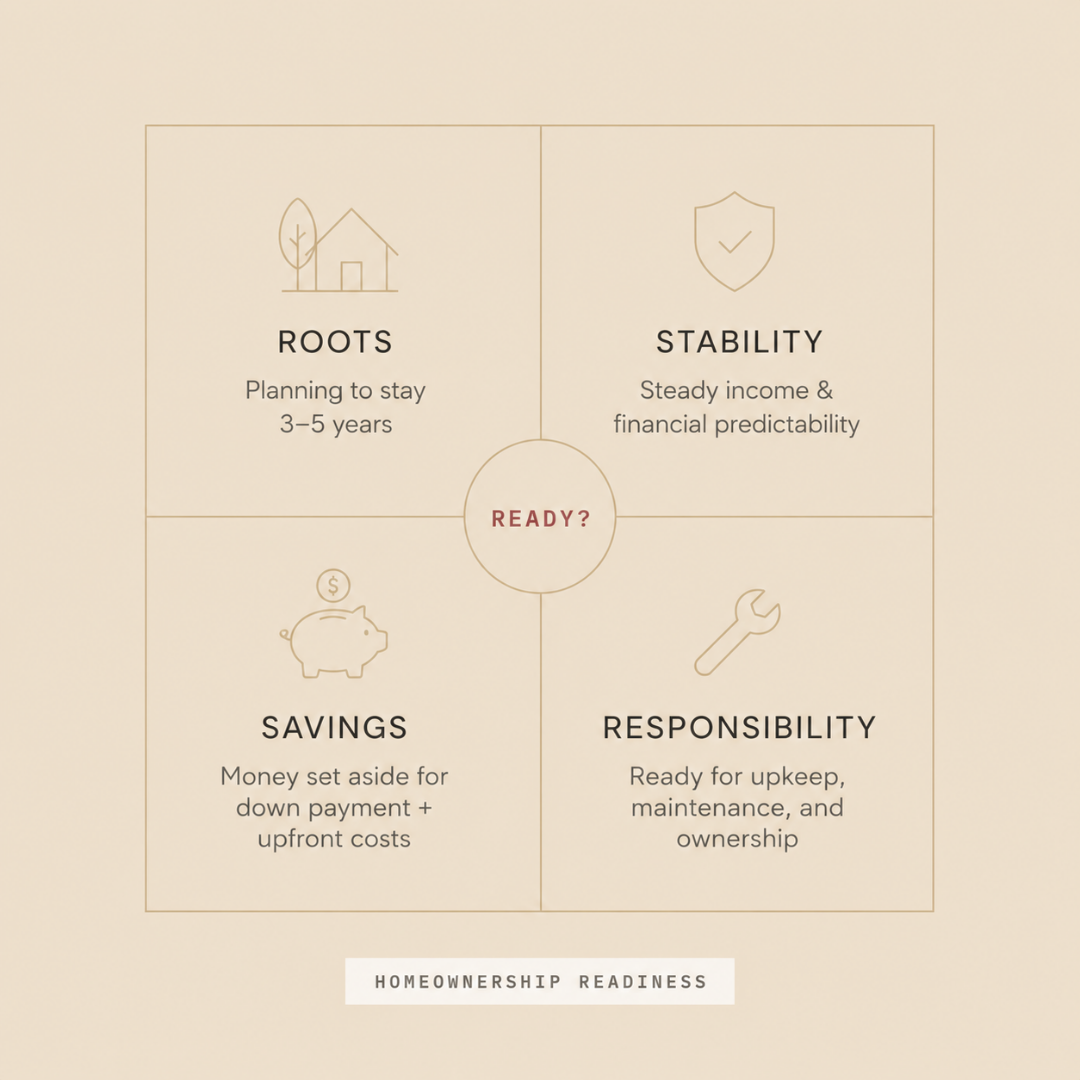
There's no perfect time to buy a home — but there is a right time for you. Before we start looking at listings, it helps to get honest about where you stand.
Do I plan to stay in this area for at least three to five years?
Is my income steady enough to plan around?
Have I started setting money aside for a down payment?
Am I ready for the upkeep that comes with owning, not renting?
Two kinds of readiness
Financial
Can you comfortably afford it?
Steady income, manageable debt, savings for a down payment and closing costs, and a cushion left over for the unexpected.
Lifestyle
Does it fit where you're headed?
Your career plans, your family plans, and how long you realistically expect to stay put all shape whether buying makes sense right now.
Homeownership isn't a milestone you rush toward — it's a decision you grow into.
Soyoe Sackey
Chapter Two
Understanding Your Budget
A budget isn't a limit on your dream — it's what makes sure the home you fall in love with is one you can actually keep.
01
Income
Lenders look at consistent, documentable income — the steadier it looks on paper, the stronger your position.
02
Debt
Your existing monthly debt shapes how much home you can responsibly finance, measured against your income.
03
Savings
This covers your down payment, but also the smaller costs that show up before you ever get the keys.
04
Monthly payment
Principal, interest, taxes, and insurance — the full number, not just the mortgage quote you see advertised.
05
Closing costs
Typically two to five percent of the purchase price, covering fees, inspections, and title work.
06
Emergency fund
Owning a home means owning its surprises. A cushion after closing keeps a leaky roof from becoming a crisis.
A simple gut check
Most buyers feel comfortable when their total monthly housing payment stays well under a third of their gross monthly income — a good place to start the conversation with your lender, not a hard rule.
Chapter Three
Getting Pre-Approved
Pre-approval turns "maybe someday" into a real number — and tells sellers you're ready to be taken seriously.
Why it matters
Pre-approval tells you what you can actually borrow, before you fall for a home outside that range. It also signals to sellers that your offer is backed by a lender, which matters in a competitive market.
What to expect
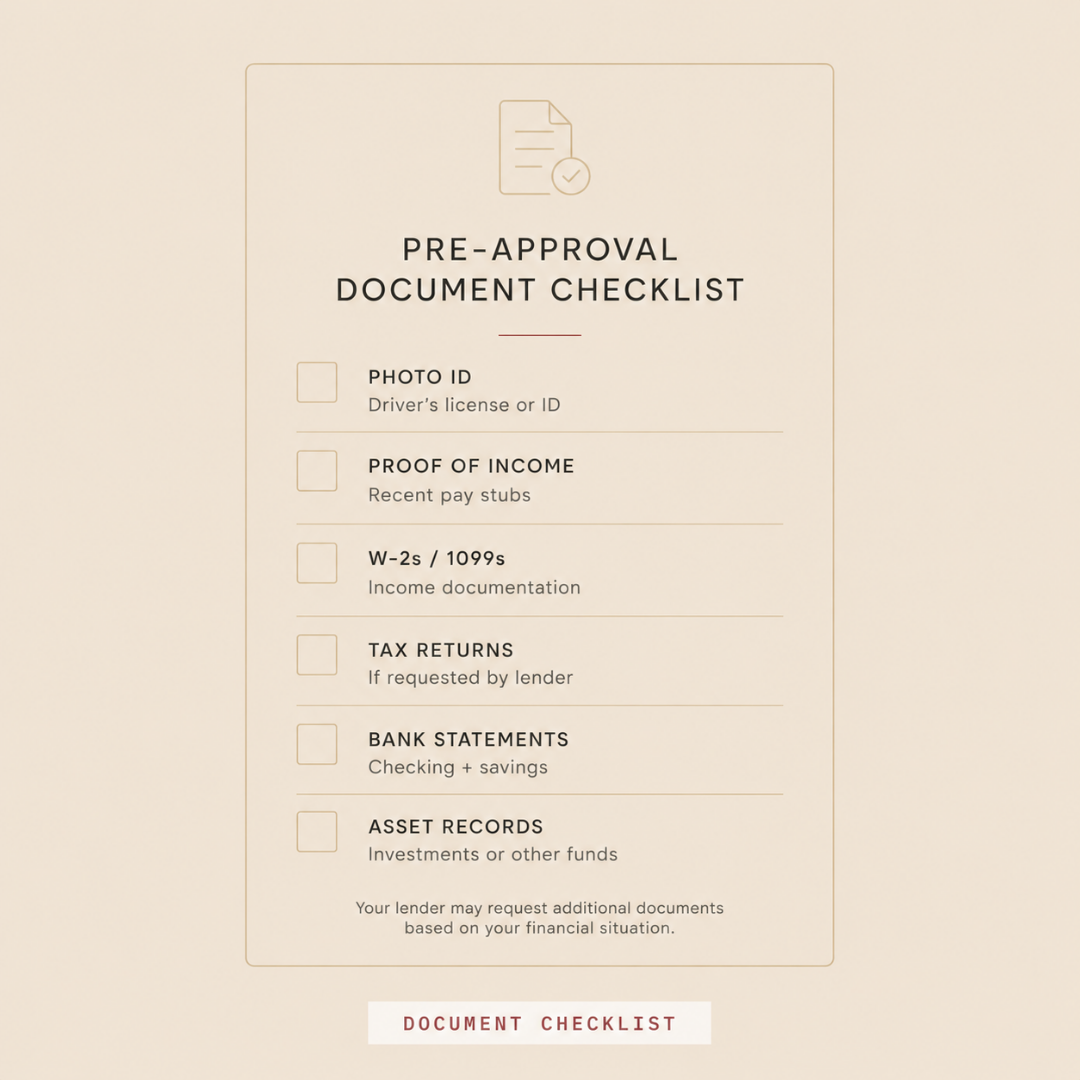
Gather documents
Pay stubs, tax returns, bank statements, and ID.
Choose a lender
Compare rates, fees, and how well they communicate.
Submit application
Your lender reviews income, credit, and debt.
Receive your letter
A pre-approval letter, usually valid 60–90 days.
Chapter Four
Building Your Home-Buying Team
You're never doing this alone. Here's who's in your corner, and what each person is responsible for.
Agent
Lender
Inspector
Title company
Insurance
Closing attorney
Each person plays a distinct role, and part of my job as your agent is coordinating between them — so you're never the one chasing down paperwork or translating jargon.
Chapter Five
Finding the Right Home
This is the part everyone imagines — but the best search starts with clarity, not a scroll through listings.
Needs vs. wants
Separating the two keeps you from overpaying for a want, or walking away from a home that actually meets your needs. We'll build this list together before we ever tour a property.
Needs
Non-negotiable
Commute distance, bedroom count, school district, budget ceiling.
Wants
Nice to have
A finished basement, a walk-in closet, a specific style of kitchen.



Three filters that outlast trends
Neighborhood
Where you'll actually live
Commute, walkability, and the day-to-day feel of the streets around you matter more than any single room.
School district
Even if it's not for you
Strong districts tend to hold value well, which matters to your future self and to any future buyer.
Resale value
The exit before the entrance
We'll always talk about what makes a home easy to sell later, even while you're picturing moving in.
Touring
What to notice
Beyond the staging: natural light, storage, layout flow, and how the home sounds and smells.
Chapter Six
Making an Offer
A strong offer isn't always the highest one — it's the one built on a clear read of the market and your comfort level.
Read the market
Is it moving toward buyers or sellers right now?
Set your number
Grounded in comparable sales, not emotion.
Add earnest money
A deposit that shows the seller you're serious.
Include contingencies
Your protections around inspection, financing, appraisal.
The best offer strategy is the one you'd still feel good about a year from now — win or lose.
Soyoe Sackey
Chapter Seven
Home Inspection & Appraisal
Two separate checks protect two separate things: what the home is worth, and what condition it's actually in.
Inspection
A licensed inspector examines the home's systems and structure, and flags anything that needs attention now or soon.
Appraisal
Your lender orders an independent estimate of the home's value, to confirm the loan amount is justified.
Common issues
Roof age, HVAC condition, plumbing, and foundation are the areas that come up most often — rarely dealbreakers, usually negotiable.
Negotiation
Findings can lead to a price adjustment, a credit at closing, or repairs completed before you move forward.
Chapter Eight
Final Loan Approval
The quiet middle stretch — underwriting is doing its work while you get ready for the finish line.
What's happening behind the scenes
Underwriting is your lender's final review of your full financial picture. It can feel slow, but it's the process that protects you from taking on more than you can manage. Once it's complete, you'll receive your clear-to-close.
Underwriting review
Your lender verifies every detail of the file.
Clear to close
Official confirmation you're approved to move forward.
Final walkthrough
One last visit to confirm the home's condition.
Avoid new debt
Hold off on big purchases or new credit until after closing.
Chapter Nine
Closing Day
Every document, every inspection, every conversation has been building toward this one appointment.
Bring
What to bring
Photo ID, your cashier's check or wire confirmation, and a copy of your contract.
Sign
What happens
You'll review and sign the closing disclosure and loan documents with your title company.
Receive
The keys
Once funds are recorded, the home is officially yours — and the keys are too.
Celebrate
This is the moment
After months of preparation, take a beat to actually enjoy it. You earned this.
Chapter Ten
Welcome Home
The process is over. The part where you actually live here is just beginning.
Week one
First week checklist
Change the locks, locate the water and breaker shut-offs, and test every smoke detector.
Setup
Utilities
Transfer or set up electric, gas, water, internet, and trash service ahead of move-in day.
Upkeep
Maintenance
Start a simple seasonal routine — gutters, filters, and caulking go a long way.
Admin
Changing your address
Update the post office, your bank, your license, and anywhere else it's on file.
Longevity
Homeowner tips
Keep every closing document. Save for future repairs. Get to know your neighbors.
Always
I'm still here
Questions don't stop at closing — reach out any time something comes up.
Bonus
Frequently Asked Questions
The questions buyers ask most, answered plainly.
How much do I need for a down payment?
It depends on the loan type — some programs allow as little as three percent down, while conventional loans without mortgage insurance typically call for twenty percent. We'll map out what fits your situation.
How long does the whole process take?
From pre-approval to closing, most buyers are looking at 30 to 60 days once an offer is accepted — though the search itself can take longer, depending on the market.
What's the difference between pre-qualified and pre-approved?
Pre-qualification is an estimate based on what you self-report. Pre-approval is a lender's verified assessment of your documents — and it's what sellers actually take seriously.
Do I need a real estate agent?
You're not required to have one, but an agent typically doesn't cost buyers anything out of pocket, and brings market knowledge, negotiation experience, and a second set of eyes on every document.
What if the inspection finds a problem?
It's rarely the end of the deal. Most issues become a negotiation point — either a price adjustment, a credit, or a repair completed before closing.
Can I still buy if my credit isn't perfect?
Often, yes. Different loan programs have different credit requirements, and there are often steps you can take in the months before applying to strengthen your position.
What are closing costs, exactly?
A collection of fees for things like the loan origination, appraisal, title insurance, and recording — usually two to five percent of the purchase price, paid at closing.
Should I buy or keep renting?
It comes down to how long you plan to stay, your financial readiness, and what the local market looks like. We can walk through the real numbers together, no pressure either way.
What is earnest money and do I get it back?
It's a deposit that shows the seller you're serious, applied toward your down payment at closing. If the deal falls through for a reason covered by your contingencies, it's typically returned.
What happens if the appraisal comes in low?
You and the seller can renegotiate the price, you can cover the difference in cash, or in some cases you can challenge the appraisal — we'll decide together based on your contract's protections.
How many homes should I tour before deciding?
There's no set number. Some buyers know after three homes; others need fifteen. What matters is comparing against your needs list, not against each other.
What's the very first step I should take?
Start a conversation — with a lender about your numbers, and with me about your goals. Everything else in this guide builds from there.
Bonus
Home-Buying Checklist
A printable summary of the whole journey, one step at a time.
Before you search
Review finances and set a budget
Check your credit
Get pre-approved
Choose your agent
Define needs vs. wants
While you search
Tour homes with your list in hand
Research neighborhoods and schools
Make a competitive offer
Schedule inspection and appraisal
Negotiate any findings
Before closing
Finalize your loan with underwriting
Purchase homeowner's insurance
Complete the final walkthrough
Confirm funds for closing day
After closing
Change the locks
Set up utilities
Update your address
Start a maintenance routine
Bonus
Real Estate Glossary
Plain-language definitions for the terms you'll hear along the way.
- Term
- Appraisal
- Term
- Closing costs
- Term
- Contingency
- Term
- Earnest money
- Term
- Equity
- Term
- Escrow
- Term
- Fixed-rate mortgage
- Term
- HOA
- Term
- Mortgage insurance
- Term
- Pre-approval
- Term
- Title
- Term
- Underwriting
An independent estimate of a home's market value, ordered by the lender.
Fees paid at closing, typically two to five percent of the purchase price.
A condition that must be met for the sale to move forward.
A deposit showing the buyer's serious intent, applied at closing.
The portion of your home you actually own, free of the loan balance.
A neutral third party holding funds or documents until conditions are met.
A loan with an interest rate that never changes over its term.
A homeowners association that manages shared community rules and spaces.
A policy protecting the lender, usually required with a lower down payment.
A lender's verified confirmation of what you're qualified to borrow.
Legal proof of ownership, verified and transferred at closing.
The lender's in-depth review of your full financial file before final approval.
Meet your guide
Soyoe Sackey
Soyoe has spent her career helping Columbus buyers move through one of life's biggest decisions without feeling rushed, overwhelmed, or sold to. Clients come to her for the same reason: she explains things clearly, answers honestly, and never pushes toward a decision that isn't right for them.